XAUUSD Explained for Price Tracking and Alerts
TickDB Research ·
XAUUSD Explained for Price Tracking and Alerts
Summary: XAUUSD quotes gold in US dollars per troy ounce. It is useful for following gold prices, building dashboards, and setting price alerts, but the symbol alone does not identify an executable price or tell you whether to buy or sell. For example, a synthetic bid of 2,400.00 and ask of 2,400.80 produce a midpoint of 2,400.40, but neither that calculation nor a threshold alert guarantees an execution price.
XAUUSD is the common market symbol for gold priced in US dollars. A quote of 2,400 would mean 2,400 US dollars per troy ounce of gold; that number is an illustration, not a live price. XAU identifies gold and USD identifies the currency used to express its value.
For someone searching for XAUUSD, the practical question is usually what the displayed number represents and what they can do with it. A quote can help monitor the gold market. Before using it in an alert or a trading decision, however, you need to know which feed produced it, what kind of price it is, and when it was updated.
What the symbol tells you
XAUUSD describes a price relationship. It does not, by itself, specify a broker, contract size, trading venue, or settlement arrangement. A chart provider may show a particular contributor's gold quote, while a broker may use the same label for a product with its own trading terms.
The price unit and the trade size are separate. A price quoted per troy ounce does not mean that every order represents one ounce. For an actual position, the contract specification determines the exposure. That distinction matters when estimating profit and loss: a one-dollar price move has different consequences for different position sizes.
Several gold-related prices can therefore appear on screen without representing the same thing:
| Price or product | What it represents | What to check |
|---|---|---|
| XAUUSD spot quote | Gold priced in dollars on a specified feed | Source, price field, timestamp |
| Broker gold product | A tradable instrument under that broker's terms | Bid/ask, contract size, charges, trading hours |
| Gold futures | An exchange contract with defined terms and expiry | Exact contract and delivery month |
| LBMA Gold Price | A benchmark established through scheduled auctions | Benchmark date and auction session |
The LBMA Gold Price is set twice daily, at 10:30 and 15:00 London time. It serves a different purpose from a continuously updating quote. Likewise, a gold futures chart can differ from a spot chart because it describes a different contract. Matching the word “gold” is not enough to make two prices comparable.
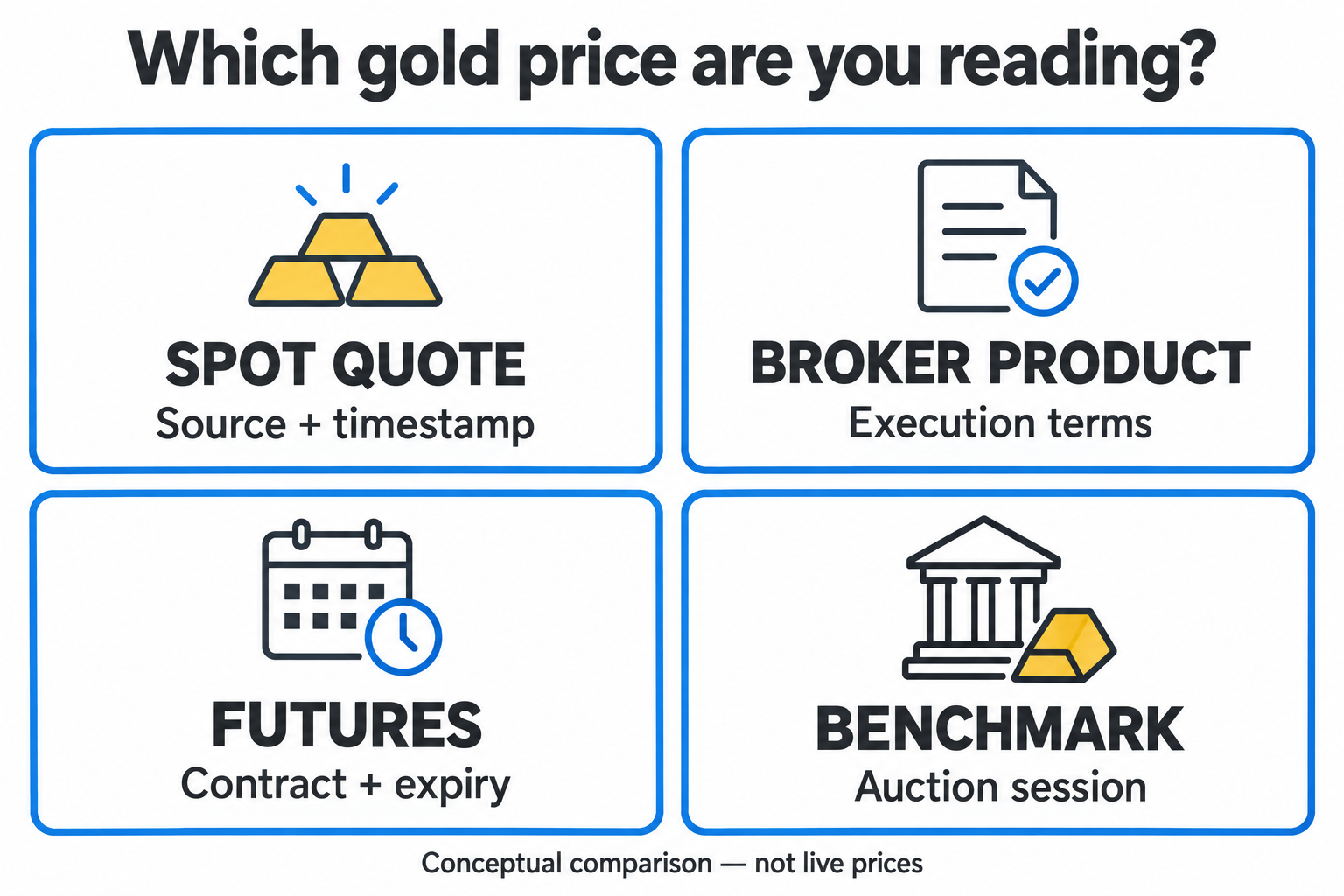
Figure 1. Gold-related prices need their own context. This is a conceptual comparison, not a live market display.
What XAUUSD is right now depends on the source and time
A useful answer to “What is XAUUSD right now?” includes a value, its source, its price type, and a timestamp with a timezone. An article cannot keep a static number current. In a live application, show those details next to the price and make the age of the last update visible.
Bid is the quoted buying price from the quoting side; ask is its quoted selling price. For a customer trading against that quote, buying normally refers to the ask and selling to the bid, subject to the broker's execution terms. The midpoint is the arithmetic average of the two. It can be convenient for a chart, but it is not a promise that a trade will execute there.
Consider a synthetic bid of 2,400.00 and ask of 2,400.80. The midpoint is 2,400.40 and the spread is 0.80 dollars per troy ounce. An alert based on the midpoint can trigger at a different moment from an alert based on the bid or ask. The application needs to name the field used by its rule.
Differences between websites do not automatically mean that one is wrong. They may use different contributors, different update times, or different price fields. Compare those details before treating the difference as a data error or a trading opportunity. A news headline saying gold crossed a level is also historical context, not evidence of the current executable price.
Useful applications for XAUUSD data
A price dashboard is a natural starting point. Display the chosen price with its unit, source and update time; when updates stop, preserve the last observation and change its status. A frozen number should not keep the same visual treatment as a fresh observation.
Price alerts add a second requirement: a precisely defined condition. “Notify me when the ask crosses above my threshold” is a clearer rule than “notify me when gold goes up.” Only evaluate accepted observations, and remember the previous accepted state to avoid sending the same notification on every update. After a gap, label the first observation appropriately; it does not reveal the exact time at which a threshold was crossed during the missing interval.
Historical charts and event reviews are also useful. Keep the price basis, timezone and candle boundaries consistent when comparing periods. If a data field describes tick activity or a particular contributor's volume, do not relabel it as total global gold turnover.
TickDB is one possible market-data input for these applications. Its current documentation lists XAUUSD for ticker snapshots and shows a metals WebSocket example with bid, ask and a timestamp. That supports considering it as a quote source; it does not establish a guaranteed execution price or prove the quality of an application built on top of it.
A small check before updating the display
The following Python 3 example accepts a normalized quote and computes its midpoint, spread and freshness status. It uses only the standard library. The five-second age limit is an illustrative application policy, not a market rule or a vendor latency promise. The supplied prices and timestamps are synthetic.
from decimal import Decimal, InvalidOperation


def quote_view(q, now_ms, max_age_ms=5000):
    """Normalized input; the five-second limit is a demo policy."""
    try:
        if q["symbol"] != "XAUUSD" or not q["source"]:
            raise ValueError("wrong symbol or missing source")
        ts = q["timestamp_ms"]
        if type(ts) is not int or ts <= 0:
            raise ValueError("invalid timestamp")
        bid = Decimal(str(q["bid"]))
        ask = Decimal(str(q["ask"]))
        if not bid.is_finite() or not ask.is_finite():
            raise ValueError("non-finite price")
        if bid <= 0 or ask < bid:
            raise ValueError("invalid bid/ask")
    except (KeyError, TypeError, ValueError, InvalidOperation):
        return {"status": "invalid", "alert_allowed": False}
    age = now_ms - ts
    status = "clock_error" if age < 0 else (
        "stale" if age > max_age_ms else "fresh")
    return {"status": status, "age_ms": age,
            "mid": str((bid + ask) / 2),
            "spread": str(ask - bid),
            "alert_allowed": status == "fresh"}


if __name__ == "__main__":
    # Synthetic data, not a current market quote.
    q = {"symbol": "XAUUSD", "source": "demo",
         "bid": "2400.00", "ask": "2400.80",
         "timestamp_ms": 1800000000000}
    print(quote_view(q, now_ms=1800000002000))
This input produces fresh, an age of 2,000 milliseconds, a midpoint of 2400.40, a spread of 0.80, and alert_allowed=True. Missing bid or ask values produce invalid; a quote older than the chosen limit produces stale. A future timestamp produces clock_error, so a clock mismatch does not silently become a fresh observation.
When adapting a TickDB response, use the documented field names and millisecond timestamp convention rather than assuming it already matches this example's normalized input. Bid and ask are conditional fields in the documentation. If either is absent, the application can show an unavailable state; it should not manufacture a midpoint from missing values or substitute zero. The example does not call an online API.
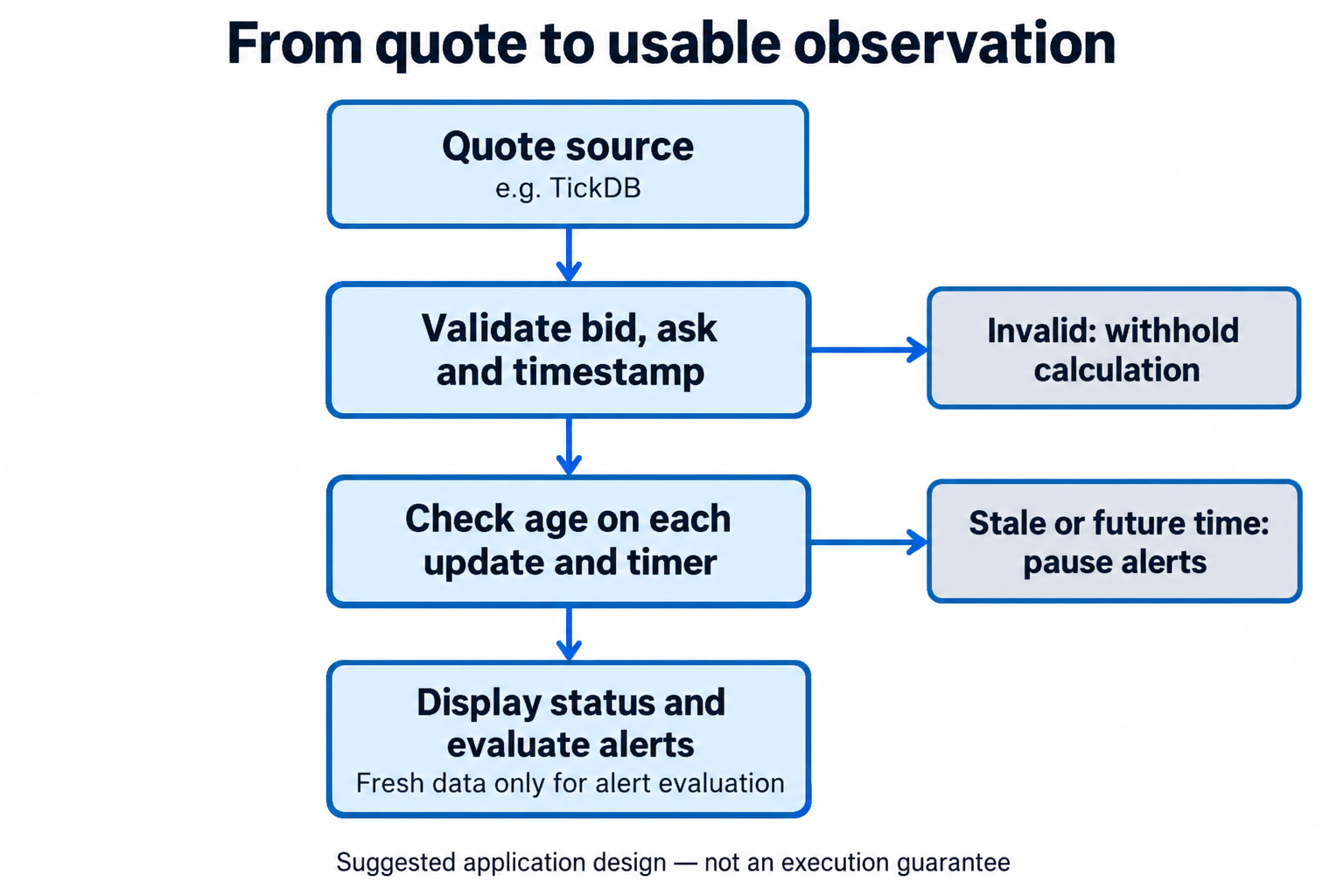
Figure 2. Suggested application flow. Data checks and alert eligibility are application logic; this is not a vendor architecture or a performance test.
Freshness must also be reevaluated on a timer. If the check runs only when a new message arrives, a disconnected feed can leave the last result marked fresh indefinitely. For a production feed, add duplicate and out-of-order handling, connection state, session-aware rules and clock monitoring. This function checks one observation; it does not implement a complete alert service.
Why a quote cannot tell you to buy or sell today
“Should I buy or sell XAUUSD today?” asks for a decision that a current quote cannot settle. The same price can support different decisions for someone closing an existing exposure, someone following a tested intraday rule, and someone simply watching the market. A price observation contains no statement about the reader's horizon, acceptable loss, costs or existing position.
An indicator or news headline does not remove those missing inputs. Before treating an alert as a trade instruction, a strategy would need explicit entry and exit conditions, position sizing, realistic spread and slippage assumptions, and evaluation outside the data used to design it. A threshold crossing on a reference feed remains an observed condition; any trade must use the actual product's terms and available execution prices.
For a dependable XAUUSD application, the first milestone is smaller and verifiable: a reader can tell which gold price is displayed, when it was observed, and whether it is eligible for the chosen calculation. When any of those details is missing, show the uncertainty and pause the affected alert. That gives the quote a clear, useful role without asking it to answer a question it cannot resolve.
Source notes: TradingView XAUUSD overview and news pages; LBMA daily auction price information; CME Group gold futures information; TickDB ticker documentation. Reviewed October 26, 2026. Numerical examples are synthetic.