How to Track Hong Kong Stock Buybacks with a Market Data API and Filings
TickDB Research ·
Abstract: How do you check a Hong Kong stock buyback announcement and calculate the change in shares in issue? Tencent's FY2025 disclosures show how to reconcile a buyback plan, actual repurchases, share cancellations and new issuance. Compare the market data API aggregate with HKEX filings, then use the share count reconciliation to explain why Tencent bought back 153.4 million shares but ended the year with 1.13% fewer issued shares.
Tencent announced that it intended to buy back at least HK$80 billion of shares in 2025. It subsequently reported that it had spent HK$80.036 billion before expenses on the Hong Kong Stock Exchange, reaching the amount it had announced. The company bought 153,415,000 shares, yet its year-end issued ordinary share count was only 104,678,954 below its opening balance, a decline of approximately 1.13%.
If you're building a buyback watchlist or checking a company's capital returns, keep the purchase date, cancellation date and period-end share count in separate columns. The purchase date tells you how much the company bought during the year. The cancellation date tells you when the shares were removed from the issued count. New shares issued during the period also affect the closing balance.
Where to find Hong Kong stock buyback announcements
Start with the document that set out the company's buyback intention. Tencent stated its 2025 intention when it released its FY2024 results on March 19, 2025. Record the amount and the period alongside the original language. An announced spending floor is a different field from the authorization granted by shareholders. Then use the FY2025 results announcement for actual on-market purchases and the annual report and monthly return for share movements.
| What to check | Tencent FY2025 | Where to verify it |
|---|---|---|
| Announced buyback intention | At least HK$80,000,000,000 | FY2024 earnings release, March 19, 2025 |
| Actual on-market consideration | HK$80,036,299,578.20 before expenses | FY2025 results announcement, p. 50 |
| Shares bought during FY2025 | 153,415,000 | Same announcement, purchase breakdown by month |
| Shares bought and cancelled in FY2025 | 147,093,000 | FY2025 annual report, Note 33(e), after deducting those pending cancellation |
| FY2025 purchases still pending cancellation at year-end | 6,322,000, cancelled in January 2026 | December 2025 monthly return, p. 7, and annual report, Note 33(e) |
| FY2024 purchases cancelled in FY2025 | 9,250,000 | Annual report, Note 33(e) |
| Shares cancelled during FY2025 | 156,343,000 | Annual report, Note 33 |
| Shares issued on exercise of options | 17,751,184 | Annual report, Note 33(a) |
| Shares allotted for the share award schemes | 33,912,862 | Annual report, Note 33(c) |
| Issued and fully paid ordinary shares, opening → closing | 9,224,914,953 → 9,120,235,999 | Annual report, Note 33. The December monthly return also confirms the closing count |
| Net change in issued ordinary shares | −104,678,954, or approximately −1.13% of the opening balance | Closing count less opening count |
Why repurchases and share cancellations fall in different periods
Of the 153,415,000 shares Tencent bought in 2025, 6,322,000 were still pending cancellation at year-end and were cancelled in January 2026. The 2025 cancellation total also included 9,250,000 shares bought in 2024 and cancelled in January 2025. Accounting for both batches gives 156,343,000 shares cancelled in 2025.
Tencent also added 51,664,046 shares through option exercises and allotments under its share award schemes. Those additions offset part of the reduction from cancellations. The full-year reconciliation closes exactly:
9,224,914,953 opening shares + 51,664,046 shares issued − 156,343,000 shares cancelled = 9,120,235,999 closing shares.
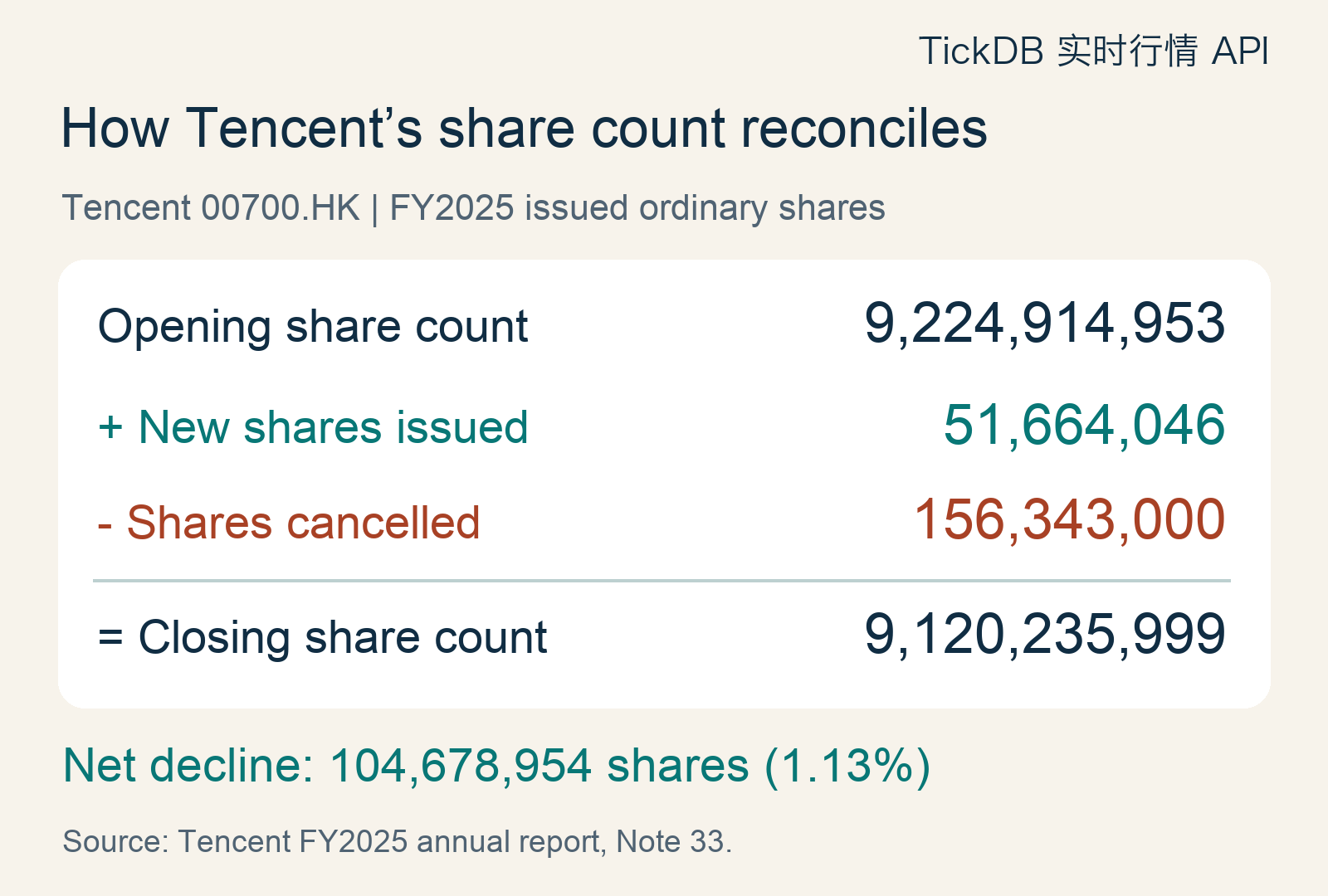
Figure 1. Tencent's FY2025 issued ordinary share count, based on the annual report, Note 33.
December illustrates why the same distinction matters in a monthly tracker. The annual report shows 22,040,000 shares bought that month. The HKEX monthly return records 24,950,000 cancellations, including some shares bought in November, and 315,997 new option shares. The share count therefore declined by 24,634,003 in December. Summing repurchases by trade date alone would miss the actual monthly share-count movement.
Why the buyback API figure differs from the filing
A saved November 19, 2026 TickDB query for 700.HK returned an FY2025 net_buyback aggregate of approximately HK$83.547 billion. Tencent's results announcement lists HK$80.036 billion in actual on-market consideration before expenses. The arithmetic difference is about HK$3.511 billion.
The two values use the same financial year and currency. The filing also specifies the transaction scope and cost basis and breaks out purchases by month. The API response contains the annual aggregate and does not expose its components. The available evidence does not identify which items explain the difference, so keep the two values in separate fields. Use the filing's actual consideration to evaluate the announced spending floor.
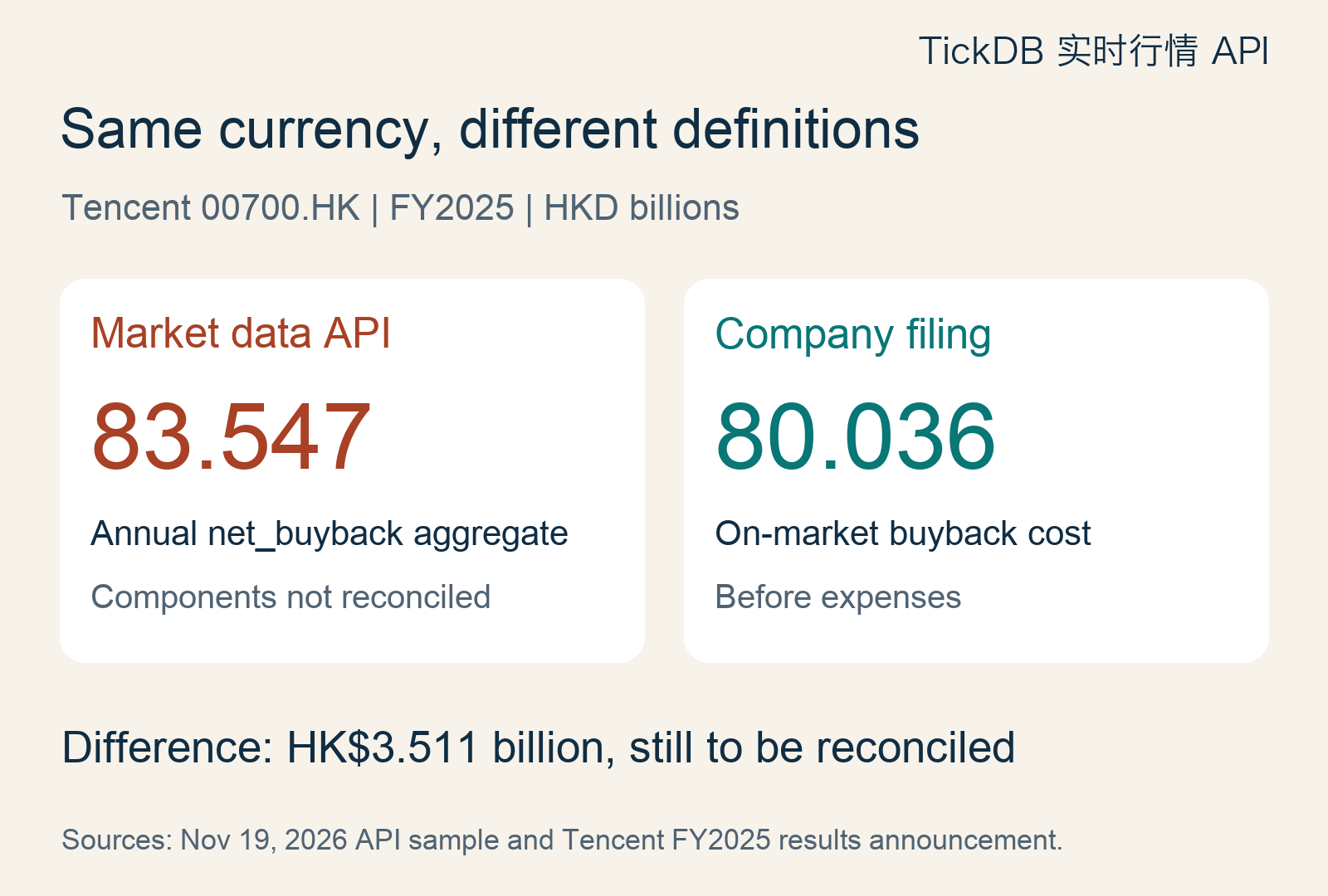
Figure 2. Both values refer to Tencent FY2025 and are displayed in HKD billions. The API aggregate has not been reconciled to the company's disclosed consideration.
For a research workflow that also needs Hong Kong stock market data, the Hong Kong stock market data API is the related market-data entry point. Keep the raw buyback field name and retrieval date beside the API value, and use the company announcement and HKEX monthly return to verify the transaction amount and issued-share movements recorded here.
A buyback tracking checklist for the next company
- Record the announcement date, coverage period, currency and the type of figure. A floor, a ceiling and an authorization each carry different meanings.
- Confirm actual purchase dates, quantities and consideration from the disclosure. Preserve any API aggregate as a separate observation until you can reconcile the definitions.
- Reconcile the opening and closing issued shares using cancellations, new issuance and any other movements disclosed for the period. Keep pending cancellations and treasury-share entries in their original reporting categories. Once the closing total balances, calculate the net change against the opening share count.
Primary records
- Tencent FY2024 earnings release, March 19, 2025, for the FY2025 buyback intention.
- Tencent FY2025 annual results announcement, p. 50, for monthly repurchases and consideration before expenses.
- Tencent FY2025 annual report, p. 28 and Note 33, for purchase amounts, share issuance and cancellations.
- Tencent December 2025 HKEX monthly return, pp. 2, 3 and 7, for the month-end reconciliation.